
PROJECT OVERVIEW
When faced with a supply chain disruption, proactive and reactive supply chain risk management can in fact make or break a company’s existence. One of the most famous (or rather infamous) cases is the fire at the Philips microchip plant in Albuquerque, New Mexico, in 2000, which simultaneously affected both Nokia and Ericsson. However, both companies took a very different approach toward the incident, and in hindsight, clearly displayed how to and how not to handle supply chain disruptions. New Mexico, in 2000, which simultaneously affected both Nokia and Ericsson
PROJECT DETAILS
- Research Name Nanostructured Materials
- Client Envato Pvt Ltd
- Category Process
- Delivery Mode Stipulated Price
- Location USA

Ultrasonic Disintegration: The Physics of Breaking Barriers with Digital Precision
Executive Summary (BLUF)
The Core Mechanism: Disintegration utilizes the violent shockwaves of transient acoustic cavitation to mechanically fracture solid matrices (tissues, tablets, soils) into constituent particles.
The Upgrade: Unlike mechanical milling which generates frictional heat and contamination, ultrasound offers non-contact, high-shear forces.
The Topsonics Edge: Success relies on frequency stability. The Topsonics 400W system replaces "analog guessing" with digital feedback, ensuring that the disintegration energy applied to Sample A is identical to Sample B.
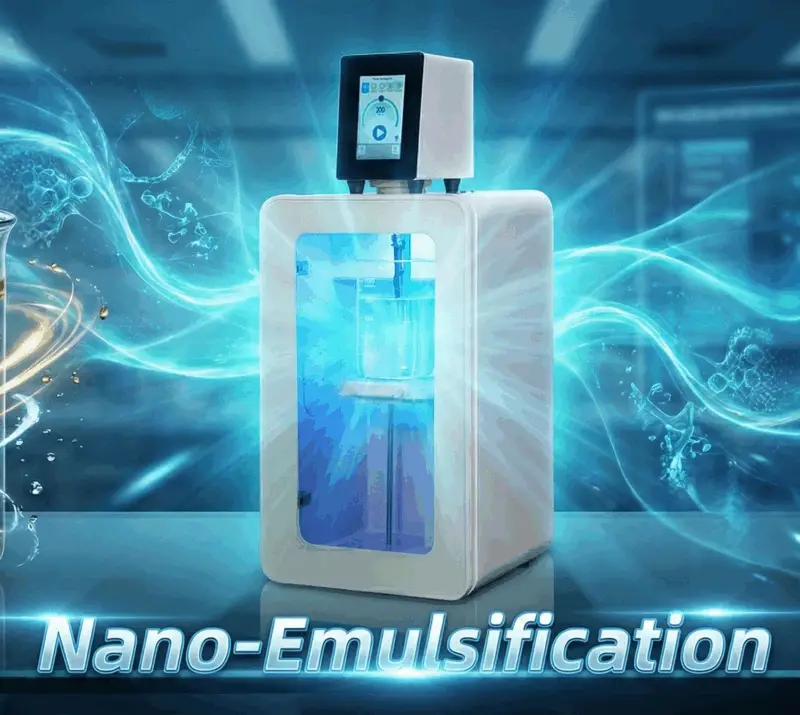
[IMG: Topsonics 400W System in Lab Setting]
1. The Science: From Macroscopic Solids to Microscopic Fragments
Disintegration is often confused with simple mixing, but thermodynamically and physically, it is a distinct violent event. While Emulsifying focuses on blending two immiscible liquids, and Sono-Chemistry focuses on radical generation for chemical reactions, Disintegration is the brute-force mechanical breakdown of solid matter suspended in a liquid.
1.1 The Mechanics of Fracture
The primary driver of ultrasonic disintegration is Transient Inertial Cavitation. When high-intensity ultrasound (typically 20 kHz) propagates through a liquid, it creates alternating high-pressure and low-pressure cycles.
As detailed in the fundamental acoustic equations, during the rarefaction cycle, if the local pressure drops below the saturated vapor pressure, a bubble is formed. Unlike stable bubbles that merely oscillate, transient bubbles grow explosively and then collapse.
The collapse near a solid interface (a particle, a cell wall, or a polymer matrix) is chemically and physically unique. Because the solid surface prevents the spherical flow of liquid during collapse, the liquid rushes in from the opposite side, forming a high-speed liquid micro-jet.
Impact Velocity
These micro-jets hit the solid surface at speeds up to 400 km/h.
Shockwaves
The collapse generates localized shockwaves with pressures exceeding 1000 atmospheres.
This combination acts like millions of microscopic jackhammers. It targets the weak points in a solid structure—cleavage planes in crystals, fibrous connections in tissues, or binding agents in pharmaceutical tablets—forcing them apart without the need for physical grinding media.
1.2 The Role of Acoustic Impedance
For disintegration to be effective, the acoustic energy must successfully transfer from the probe to the liquid. This is governed by Acoustic Impedance ($Z$):
$$Z = \rho \cdot c$$
Where $\rho$ is density and $c$ is the speed of sound. In disintegration applications, the slurry often changes viscosity and density as the solid breaks down (e.g., a thick sludge becomes a thin suspension). This changes the impedance load on the transducer. If the ultrasonic system cannot adapt to this changing $Z$, the cavitation intensity drops, and the disintegration fails to complete.
Scientific Note: Disintegration is the precursor to efficient extraction. By breaking the cell walls (Cell Disruption), we release intracellular content. For a deeper dive into the chemical extraction that follows this mechanical step, refer to our analysis on Botanical Extraction (Coming Soon).
2. The Gap: Why "Old School" Grinding Fails Modern Science
In many laboratories, disintegration is still performed using mortar and pestles, ball mills, or rotor-stator homogenizers. While functional, these methods introduce variables that ruin reproducibility in sensitive applications like proteomics or nanomaterial synthesis.
2.1 The Heat and Contamination Problem
Mechanical friction generates uncontrolled heat. If you are disintegrating biological tissue to study proteins, a temperature spike above 40°C can denature your sample, rendering the analysis useless. Furthermore, ball mills introduce "wear debris" (microscopic bits of the grinding balls) into your sample, contaminating high-purity nanomaterials.
2.2 The "Analog Drift" of Older Ultrasonic Units
Many ultrasonic homogenizers currently on the market resemble industrial welding equipment from the 1990s. They utilize analog frequency tuning (often a manual knob).
The Physics of Failure
As the probe heats up during disintegration, its physical dimensions expand slightly. This shifts its Resonance Frequency.
The Consequence
If the generator effectively "loses" the resonance frequency because it cannot auto-tune fast enough, the amplitude ($A$) drops.
The Result
You think you are sonicating at 100% power, but you are effectively delivering 40%. Your particle size distribution curve shifts, and the experiment is not reproducible.
Effective Power Delivery Under Load
Analog System
40%
Topsonics Digital
98% (Constant)
Figure 2: Impact of Digital Frequency Tracking on Energy Stability.
3. The Topsonics Solution: Disintegration with Digital Reproducibility
At Topsonics, we recognize that the hardware must disappear behind the science. You shouldn't be fighting the machine; you should be focusing on the breakdown of your matrix. Our 400W Laboratory Homogenizer is engineered to solve the variability inherent in disintegration processes.
3.1 Smart Frequency Tracking (Auto-Tuning)
Our system utilizes a digital feedback loop that monitors the piezoelectric stack continuously. As the viscosity of your sludge changes during disintegration, or as the probe warms up, our generator adjusts the frequency (typically within a ±100 Hz window around 20 kHz) in real-time.
Benefit
This ensures that the Mechanical Amplitude at the probe tip remains constant, regardless of the load. Whether you are disintegrating soft liver tissue or hard ceramic powders, the energy density remains stable.
3.2 Controlled Energy Density
Disintegration requires a delicate balance. Too little energy, and the aggregates remain. Too much energy (specifically, prolonged exposure to the "Hot Spot" temperatures of ~5,000 K), and you risk burning the sample or inducing unwanted chemical changes (see Cracking for when bond-breaking is intentional).
The UI Advantage
Our 5-inch high-resolution touch screen allows you to set precise Pulse Modes. By cycling power (e.g., 5 seconds ON, 2 seconds OFF), you allow heat to dissipate between shockwaves, preserving heat-sensitive structures while maintaining mechanical destruction.
3.3 Versatility in Media
Unlike rotor-stators that struggle with abrasive media, the Topsonics probe handles various solvent systems. Whether your disintegration medium is water, alcohol (for phytochemicals), or glycerin, the system adapts.
Note: When working with volatile solvents during disintegration, always consider the vapor pressure, as high vapor pressure reduces the intensity of cavitation collapse.
4. Comparative Analysis: Disintegration Efficiency
The following table visualizes why Ultrasonic Disintegration is the preferred method for high-value laboratory samples compared to traditional mechanical methods.
| Method | Mechanism | Heat Generation | Sample Loss/Contamination | Suitability |
|---|---|---|---|---|
| Mortar & Pestle | Mechanical Compression | Low to Moderate | High (Surface adhesion) | Coarse powders, basic grinding |
| Rotor-Stator | Shear Stress | High (Friction) | Moderate (Trapped in stator) | Soft tissues, large volumes |
| Topsonics Ultrasonic | Transient Cavitation & Shockwaves | Controllable (Pulse Mode) | Zero (Direct probe contact only) | Nanomaterials, bacteria, hard tissues |
5. Frequently Asked Questions (FAQ)
Q: Is ultrasonic disintegration different from dissolution?
A: Yes. Disintegration is the mechanical breakdown of a solid matrix into smaller particles (increasing surface area). Dissolution is the chemical solubilization of those particles into the solvent. Ultrasound drastically accelerates dissolution by performing rapid disintegration first.
Q: Can I use the Topsonics 400W unit for breaking down fibrous plant material?
A: Absolutely. Fibrous materials (like hemp or cellulose) are resistant to simple stirring. The cavitation shockwaves penetrate the fiber bundles, delaminating them. This is often referenced in our Botanical Extraction applications.
Q: How do I prevent cross-contamination between samples?
A: This is a major advantage of the Topsonics probe design. Unlike rotor-stators with complex internal bearings, our titanium sonotrode is a single solid piece. Simply wipe it down and run it in a solvent beaker for 5 seconds to self-clean via cavitation before moving to the next sample.
6. Next Steps
Are you tired of inconsistent particle sizes or fearing that your analog equipment is drifting during crucial experiments?
Would you like me to guide you through the specific pulse settings required for your unique sample matrix? Contact our scientific team for a consultation.
References
- Standard Practice for Ultrasonic Extraction of Soils, ASTM D-Methods (General Reference).
- Advanced Ultrasonic Homogenization and Sonochemical Engineering: A Comprehensive Analysis, Section 1.2 "Cavitation Regimes".
- Ibid, Section 2.3 "Suslick’s Hot Spot Theory".
- Ibid, Section 3.2.2 "Finite Element Analysis Implementation".
- Comparison of extraction methods, Section 7.2.